 Insect Scanner
Asian Tiger Mosquito
Aedes albopictus
Quick answer
Itchy bites and can spread disease. Safety level: Use caution.
How to identify the Asian Tiger Mosquito
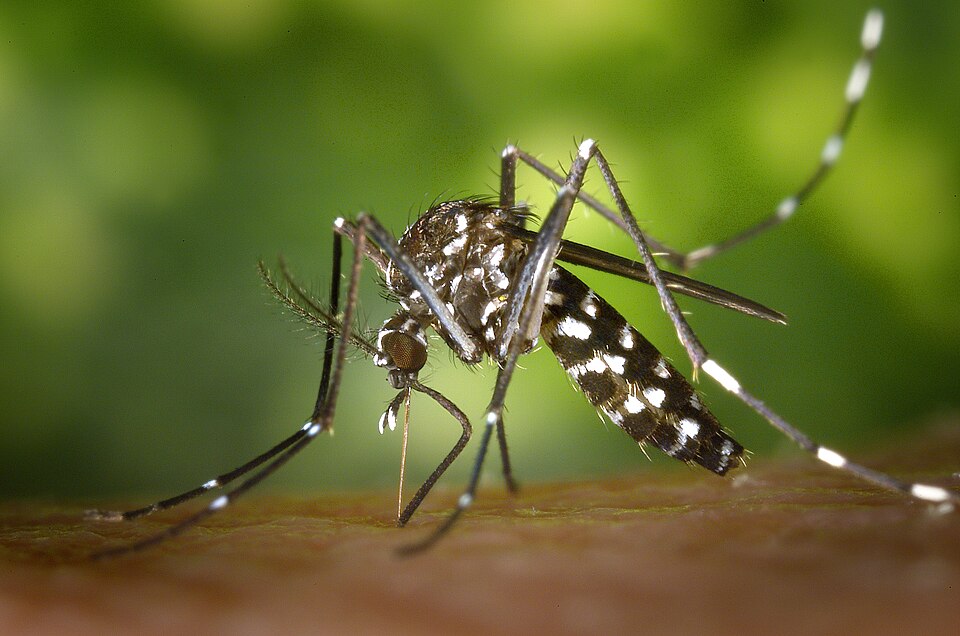
- A small black mosquito with bright white stripes on its legs and body.
- A single white stripe runs down the middle of its head and back, a key sign that separates it from similar mosquitoes.
- Unlike many mosquitoes, it bites during the day, especially in the morning and late afternoon.
- Size: 2–10 mm.
Where it lives
Native to Southeast Asia and now spread across the Americas, Europe, Africa and the Middle East. It breeds in small amounts of standing water: plant saucers, buckets, tyres, blocked gutters and even bottle caps.
Is it dangerous?
Bites cause itchy bumps. More importantly, this mosquito can spread viruses such as dengue, chikungunya and Zika in areas where those diseases occur. Not every bite carries disease, but preventing bites is the best protection.
Not sure what bug you found?
Take a photo and Insect Scanner tells you its name, whether it is dangerous and what to do. Your first scans are free.
📷 Identify a bug from a photoChildren and pets
Use child-safe repellent outdoors.
What to do
- Empty standing water in pots, buckets and gutters.
- Use window screens and repellent at dawn and dusk.
Fun fact
You can tell it by the white stripes on its legs and back.
⚠ Call emergency services straight away for trouble breathing, swelling of the face or throat, or a scorpion sting in a child. This page is general information, not medical advice.
Frequently asked questions
How do I stop tiger mosquitoes breeding at home?
Once a week, empty or scrub anything holding water: plant saucers, pet bowls, buckets, toys and gutters. Cover water tanks.
Which repellents work?
Repellents containing DEET, picaridin (icaridin) or oil of lemon eucalyptus are recommended by health agencies. Follow the label, especially for children.
When should I see a doctor after mosquito bites?
See a doctor if you get a fever, rash, joint pain or headache after being bitten, especially in or after visiting an area with dengue or similar diseases.
Related reading
Updated 2026-11-12