 Insect Scanner
Brown Recluse Spider
Loxosceles reclusa
Quick answer
Venomous bite that can damage skin. Safety level: Venomous / dangerous.
How to identify the Brown Recluse Spider
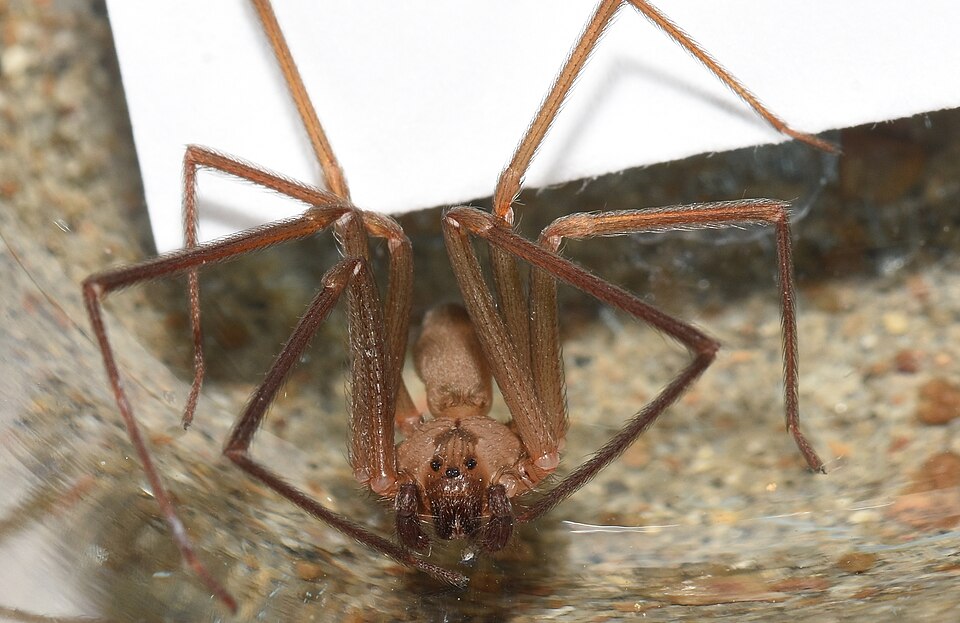
- A light to medium brown spider with a darker violin-shaped mark on its back, the neck of the violin pointing toward the rear.
- It has six eyes arranged in three pairs, unlike most spiders, which have eight. This is the most reliable sign.
- Legs are long, thin and evenly coloured with no bands or stripes.
- Size: 6–20 mm.
Where it lives
Native to the central and southern United States. Related recluse spiders live in South America, Africa and the Mediterranean. Indoors it hides in closets, attics, basements, behind furniture and in stored boxes and clothing.
Is it dangerous?
The brown recluse is venomous but shy, and bites only when trapped against skin. Many bites heal without trouble. Some cause a red, painful area that can blister and turn into a slow-healing wound over several days. Rarely it causes fever and illness. Many skin infections are wrongly blamed on recluse bites, so a doctor should look at any wound that spreads.
Not sure what bug you found?
Take a photo and Insect Scanner tells you its name, whether it is dangerous and what to do. Your first scans are free.
📷 Identify a bug from a photoChildren and pets
Keep children and pets well away.
What to do
- Shake out shoes and clothes stored in closets.
- Use sticky traps along walls in storage areas.
- See a doctor if a bite turns red or blisters.
Fun fact
It has a dark violin shape on its back.
⚠ Call emergency services straight away for trouble breathing, swelling of the face or throat, or a scorpion sting in a child. This page is general information, not medical advice.
Frequently asked questions
What does a brown recluse bite look like?
At first it may look like a small red mark. Watch for a growing red area, a blister or a dark centre over the next days, and see a doctor if that happens.
How do I avoid brown recluse bites?
Shake out shoes, clothes and bedding that have been stored, move beds away from walls and wear gloves when sorting boxes.
Is every brown spider a brown recluse?
No. Most brown house spiders are harmless. Check for six eyes and a violin mark, and keep your distance if unsure.
Related reading
 Species guideBlack Widow SpiderSpecies guideMexican Red-knee TarantulaSafetyInsect bite or sting: what to do and when to get helpIdentificationHow to identify an insect from a photo: a simple guide
Updated 2026-11-12