 Insect Scanner
Western Honey Bee
Apis mellifera
Quick answer
Can sting when threatened. Dangerous only with a bee allergy. Safety level: Use caution.
How to identify the Western Honey Bee
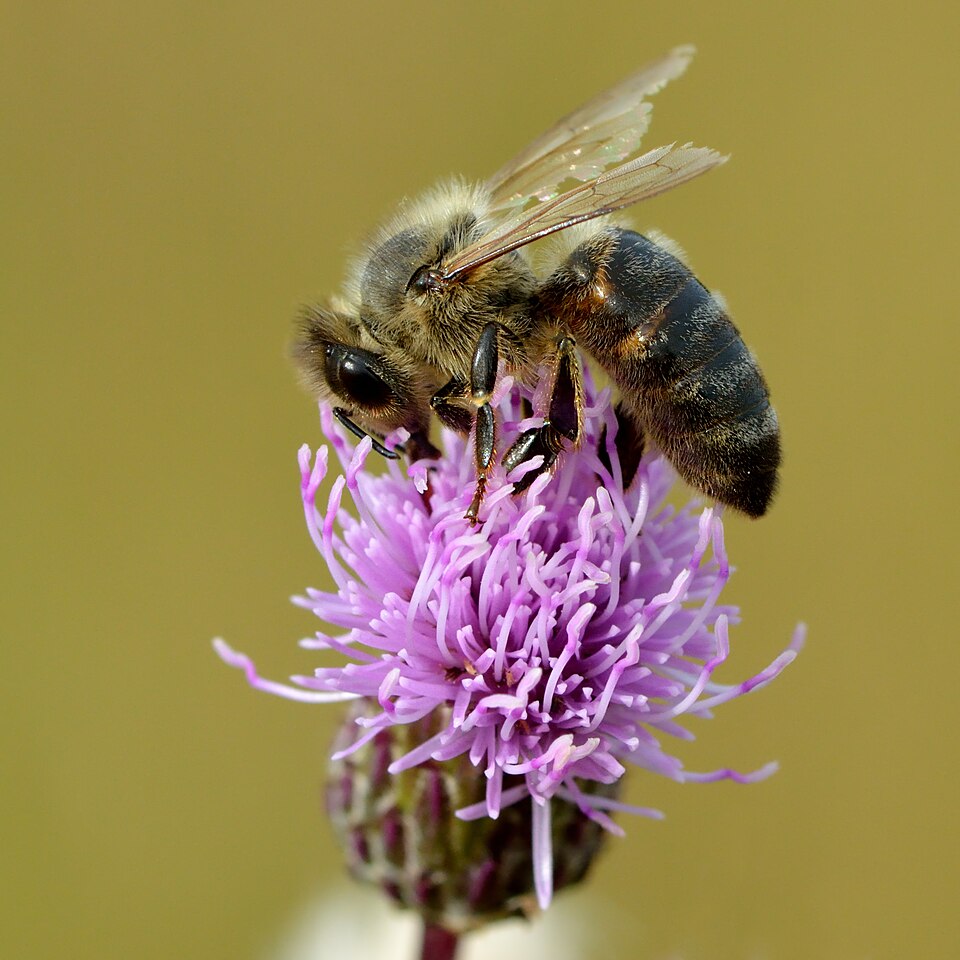
- A fuzzy, golden-brown to dark brown bee with darker bands across the abdomen.
- Smaller and slimmer than a bumble bee, with hairy eyes and a hairy body that collects pollen.
- Workers often carry yellow or orange pollen "baskets" on their back legs.
- Size: 12–15 mm.
Where it lives
Kept by beekeepers on every continent except Antarctica, and also found in wild colonies in hollow trees, walls and roofs. Foragers visit flowers in gardens, parks and farmland within a few kilometres of the hive.
Is it dangerous?
A honey bee stings only to defend itself or its hive, and dies after stinging. For most people a sting causes sharp pain, redness and swelling that fade within hours to days. For people with a bee-venom allergy a single sting can cause a severe reaction (anaphylaxis) that needs emergency care. Many stings at once are dangerous for anyone.
Not sure what bug you found?
Take a photo and Insect Scanner tells you its name, whether it is dangerous and what to do. Your first scans are free.
📷 Identify a bug from a photoChildren and pets
Keep children and pets from swatting it.
What to do
- Stay calm and move away slowly; don't swat.
- If stung, scrape the stinger out with a card.
- Call emergency services if someone has trouble breathing.
Fun fact
A honey bee visits 50 to 100 flowers on one trip out of the hive.
⚠ Call emergency services straight away for trouble breathing, swelling of the face or throat, or a scorpion sting in a child. This page is general information, not medical advice.
Frequently asked questions
How do I remove a bee stinger?
Scrape it out sideways with a fingernail or the edge of a card as soon as you can. Then wash the area and use a cold pack to ease swelling.
When is a bee sting an emergency?
Call emergency services straight away if someone has trouble breathing, swelling of the face, lips or throat, dizziness, or was stung many times.
Will a honey bee sting if I stay still?
Usually not. Move away calmly and slowly; swatting makes bees more likely to sting.
Related reading
Updated 2026-11-12