 Insect Scanner
Field Cricket
Gryllus pennsylvanicus
Quick answer
Harmless. Loud at night, nothing more. Safety level: Harmless.
How to identify the Field Cricket
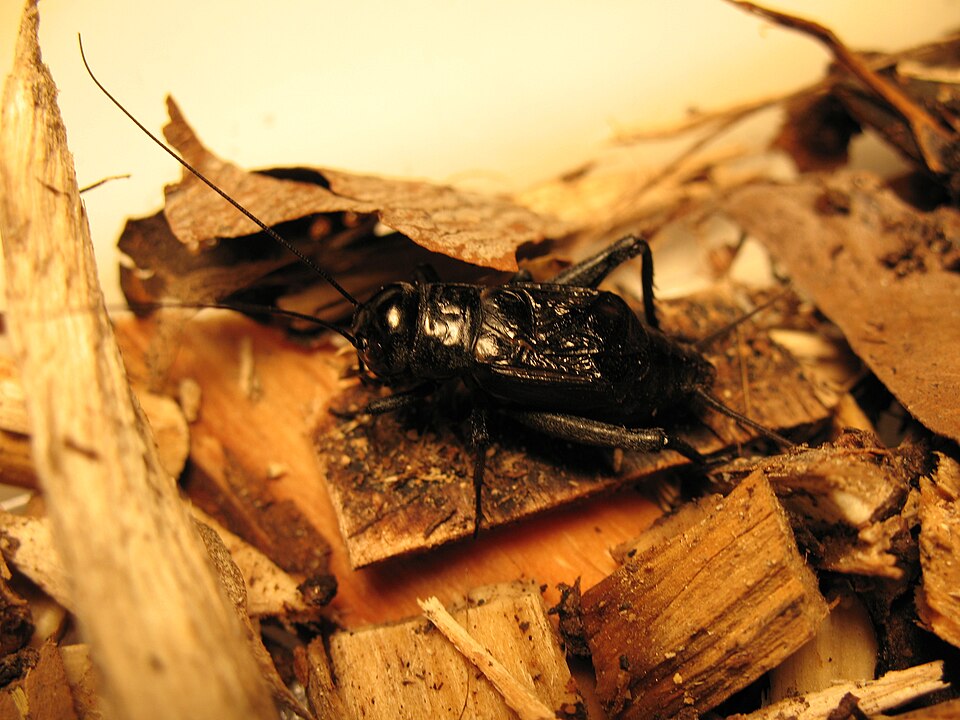
- A shiny black or dark brown insect with a large head, long thread-like antennae and big back legs built for jumping.
- Two thin "tails" (cerci) stick out from the end of the body. Females also have a long, needle-like egg-laying tube between them.
- Wings lie flat over the back. Males make the familiar chirp by rubbing them together.
- Size: 15–25 mm.
Where it lives
Common in fields, lawns, gardens and roadsides across North America. Similar field crickets live around the world. They hide under stones, logs and grass by day and come out at night; in late summer and autumn they often wander indoors.
Is it dangerous?
Field crickets are harmless. They do not sting, have no venom and rarely bite people. Indoors they may nibble paper, cloth or stored food, but they do not spread disease to people.
Not sure what bug you found?
Take a photo and Insect Scanner tells you its name, whether it is dangerous and what to do. Your first scans are free.
📷 Identify a bug from a photoChildren and pets
Safe. It doesn't bite people or pets.
What to do
- Seal gaps under doors to keep it outside.
- Turn off porch lights at night; they attract crickets.
Fun fact
Only males chirp, by rubbing one wing against the other.
Frequently asked questions
Why do crickets chirp at night?
Males chirp to attract females and warn off other males. Chirping speeds up as the temperature rises.
Can a cricket bite you?
A field cricket can nip if held tightly, but it is weak and rarely breaks the skin.
How do I get a cricket out of my room?
Turn off lights to calm it, then cover it with a cup and slide paper underneath to carry it outside.
Related reading
Updated 2026-11-12