 Insect Scanner
Seven-spot Ladybug
Coccinella septempunctata
Quick answer
Harmless and a friend to gardens. Safety level: Harmless.
How to identify the Seven-spot Ladybug
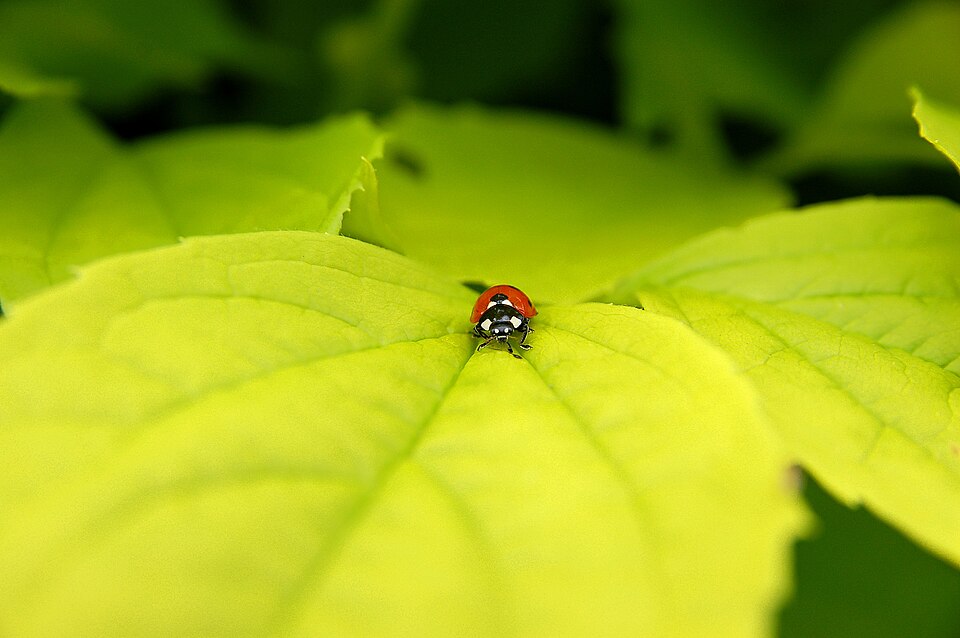
- A rounded, dome-shaped beetle with bright red or orange wing cases and seven black spots: three on each side and one shared in the middle near the head.
- The head and the area just behind it are black with two small white patches on each side.
- Its larvae look nothing like the adult: they are long, dark grey and spiky with orange marks, and are often mistaken for pests.
- Size: 6–8 mm.
Where it lives
Found across Europe, Asia and North Africa and introduced to North America. It lives wherever aphids are common: gardens, meadows, farm fields, roadsides and parks. In autumn adults gather in sheltered spots, sometimes inside houses, to spend the winter.
Is it dangerous?
The seven-spot ladybug is not dangerous. It has no sting and no venom. Very rarely it gives a light pinch that feels like a scratch. When disturbed it can release a yellow, bad-smelling fluid from its legs ("reflex bleeding") that may stain fabric but is harmless to skin.
Not sure what bug you found?
Take a photo and Insect Scanner tells you its name, whether it is dangerous and what to do. Your first scans are free.
📷 Identify a bug from a photoChildren and pets
Safe to watch and hold gently.
What to do
- Leave it be: it eats aphids that harm plants.
- If it's indoors, cup it and release it outside.
Fun fact
One ladybug can eat about 5,000 aphids in its lifetime.
Frequently asked questions
Do ladybugs bite people?
Seven-spot ladybugs almost never bite. A handled ladybug may give a tiny pinch, but it cannot break the skin in a harmful way.
Are ladybugs poisonous to dogs or cats?
Their bitter taste puts most pets off. A pet that eats several may drool or vomit; contact a vet if your pet seems unwell.
Why are there ladybugs in my house in autumn?
They look for a dry, sheltered place to spend the winter. Collect them gently and release them outdoors.
Related reading
Updated 2026-11-12